UX designers and product designers share many similarities. For instance, they both strive to build user-friendly, successful digital products.
UX designers benefit greatly from having a UX design portfolio; product designers also benefit from having a product design portfolio.
In today’s guide, we’ll focus on the latter. We’ll reveal how you can create a product design portfolio that effectively reflects your skills and abilities. We’ll also cover inspirational examples and must-have tips and tricks!
What Is a Product Designer Portfolio?
A portfolio, product design or otherwise, is where you’ll find a selection of a designer’s best work. In this sense, it is an organized demonstration of a product designer’s most valuable skills and competencies.
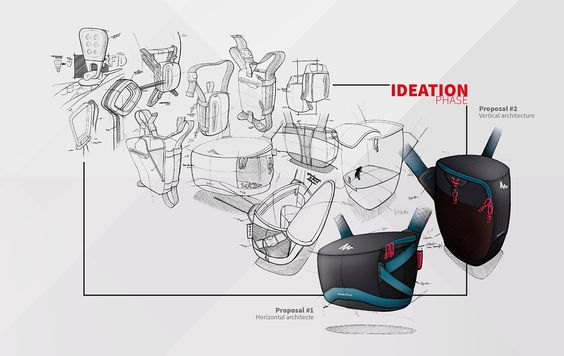
That said, your portfolio shouldn’t just contain your finalized digital products. It should delve behind the scenes, exploring the design journey from the ideation stage to the user testing stage. That’s why, more often than not, the best portfolios contain detailed design case studies.
Ultimately, your portfolio is your chance to show off how your work, processes, and methodologies led to a design solution.
How To Build a Product Design Portfolio
Now, let’s get down to business – how to build a product design portfolio. Follow our handy step-by-step guide below, and you’ll end up with a portfolio that impresses hiring managers time after time.
1. Finding Your Best Work
Before you do anything, you should take some time out to think about the clients you want to appeal to. Having this in mind, you’ll be able to start narrowing down your design projects.
When you’re down to the most impactful contenders, you need to determine which ones showcase your range the best. Which of your projects demonstrate your creativity the most? Which of your projects shine a light on your ability to overcome challenges?
These are the sorts of questions you need to ask to find the right projects to include in your portfolio.
Tip: Don’t make it your default to pick the most aesthetic projects. You need projects that clarify the breadth of your skills.
2. Telling the Client More About You
In your “About Me” section, you should explain what you specialize in and what drew you to your specialties.
If you have quirks or interesting hobbies, show them off. A little personality can go a long way, especially in the competitive landscape of product design.
You should also add ways for a client to get in touch with you. Think professional email addresses and links to your social media accounts.

3. Creating Your Case Studies
This is where the spotlight truly hits your creative skills. Start your case studies by contextualizing your projects and describing the users’ problems that you set out to solve.
Then, for each project, detail your user research, explaining your chosen methods and their impacts on the project. At this stage, you’ll want to transition into the design solutions you came up with.
Talk about how your solutions bridged the gap between the users’ needs and your business goals. Don’t forget to add your wireframes, mockups, and prototypes!
At the end of your case studies, you should display your final outcomes and explain their evolution through iterations. Reflect on your work and summarize your findings.
What did you learn during the design process? Were there any surprising findings about your target users? What would you do differently with a more flexible budget?
4. Designing Your Portfolio
If you’re familiar with UI design principles, here’s where they become really handy. Treat your portfolio as another one of your products by creating strong visual hierarchies and layouts.
Simply put, you should make your portfolio easily navigable, consistent, and engaging. Thankfully, there are many ways you can make your portfolio more engaging. Brand-centric color palettes, trendy typography, and high-quality photography; the possibilities are endless!
Once you’re happy with your work, test it on your peers and mentors. With the feedback they give you, you can refine your portfolio until it’s too good for a client to ignore!

Taking Inspiration From an A-Level Product Design Portfolio
We’ll examine an A-level product design portfolio to give you a better idea of what a comprehensive portfolio looks like. We picked this example, in particular, not for its visual design but for its incredibly detailed content.
This portfolio starts by addressing prominent issues such as homelessness and plastic waste. Then, you’ll see a range of product ideas, and the student will discuss their feasibility and potential obstacles. Already, the “client” can see that this designer can anticipate future problems and identify the more lucrative opportunities.
As you read, you’ll find statistic-backed research, annotations of stakeholders’ emails, wireframes, and a detailed retelling of the development process. This is what makes it easy to see how valuable this designer would be to a business.
Overall, this student’s work is incredibly impressive, demonstrating their ability to consider the needs of the stakeholders and users. Undoubtedly, you should emulate this level of meticulous planning in your own portfolio.
More Great Examples of Product Design Portfolios
The previous example is great for learning what your portfolio’s content should look like. Now, let’s look at examples of product design portfolios that combine exceptional content with compelling visuals.

Simon Pan
A senior staff designer at Google, you may know Simon Pan for his next-level Uber Magic 2.0 case study.
In this study, he set out to redesign the Uber app, conducting tests in busy pickup areas in San Francisco. This demonstrates Pan’s determination to understand and address an urgent problem that was affecting the user’s experience.
By the end of this case study, Simon Pan had a wealth of user-centric research to guide his strategies. Note Pan’s use of high-quality images, maps, videos, user flows, and tables.
It’s these elements that highlight Pan’s problem-solving prowess and understanding of user-centered design.

Jonathan Patterson
Jonathan Patterson is a freelance product design generalist from Detroit with a mind-blowing portfolio.
On the visual side, clients can experience the extent of Patterson’s creative genius. From intriguing parallax effects to fluid animations to bold typography elements, Pattern’s portfolio is a work of art in itself.
As for Patterson’s case studies, they tick all of the right boxes. As you can imagine, Patterson addresses relevant issues, including doom-scrolling and celebrity-fan dynamics.
In each of Patterson’s studies, you can clearly visualize his creative process, from identifying problem statements to creating high-fidelity prototypes. If you want to learn how to put forth your user-centricity and knowledge of market trends, look to this portfolio.
Learning From Product Design Portfolio Examples: 9 Top Tips & Tricks
It’s safe to say the product design portfolio examples we’ve explored are top-of-the-line. To make sure that your portfolio reaches the same standard, follow the tips and tricks below.
- Instead of listing the steps in your process, tell a compelling narrative to engage your clients.
- Display your work in full size.
- Showcase the work you want to continue doing.
- Create a solid balance between text and visual elements.
- Make your introductions short and sweet.
- Only explain the parts of the project that you contributed to.
- Check your spelling and grammar.
- Utilize design styles and aesthetics that reflect your brand.
- Prioritize projects with variety and complexity over your best-looking final outcomes.
FAQ
What should I include in a product design portfolio?
Your portfolio should include both the processes behind creating the final outcome and the final outcome itself.
How long should my product design portfolio be?
Every portfolio is unique, meaning that there isn’t a definitive amount of pages that you should aim for. That said, we recommend aiming to make your portfolio no shorter than 10 pages and no longer than thirty pages.
Do product designers need portfolios?
Every designer needs a portfolio. Without one, they cannot effectively demonstrate their valuable skills and abilities.
Product Design Portfolio: Look for Top Creative Ideas on Page Flows
With our guidance and examples, you’ll create an exceptional design portfolio in no time. But our guidance doesn’t end with portfolios. We also offer inspirational resources that will help you master intuitive user navigation.
At Page Flows, we host a vast collection of recordings and screenshots that detail essential user flows from thriving industries. If you need onboarding inspiration for your beauty website, we’ve got your back. If you need a general browsing flow for your travel app, we have what you need.
In other words, Page Flows is where you’ll learn how to truly master the art of user flows. With us, you’ll learn from the giants in your industry, taking inspiration from the best of the best, like Amazon.
Like your product design portfolio, we only showcase the most valuable, versatile flows.
Get started today to unlock the secrets behind your favorite product’s navigational structures!