A successful onboarding process will concisely, helpfully, and engagingly acquaint your users with your product. Of course, this will benefit your users, but it will also benefit your business.
Simply put, an effective onboarding experience will increase your conversion rates and your retention rates. Needless to say, this will help you establish a positive brand reputation and place scaling opportunities comfortably within reach.
So, today, we’ll focus on optimizing this process. We’ll start by covering the elements and principles of an engaging onboarding experience. Then, we’ll reveal how you can leverage the values of employee onboarding programs to refine your user onboarding process.

Understanding Great Onboarding Experiences
It’s only fitting that we discuss what an onboarding experience is before we reveal how to optimize one.
In the context of UX design, the user onboarding process involves designing the perfect introduction to your product’s features. In other words, onboarding processes serve as the first impression your users will have of your product and brand.
For that reason, UI/UX designers aim to demonstrate to users why their products will help them achieve their goals. Most importantly, their users should learn how to use their product by the end of an effective onboarding process.
To help a designer achieve these goals, they’ll often incorporate the following elements into their onboarding flows:
- Welcome screens
- Interactive/video product tours
- Progress bars
- Checklists
- Tooltips/Hot spots
- Help centers
- Game tutorials

5 Principles That the Best Onboarding Experiences Follow
Knowing the value of a positive onboarding experience, it’s time to learn how to optimize your own. A great way to do this is to familiarize yourself with the principles that the best onboarding experiences utilize.
Let’s start with arguably the most important principle of them all: user-centricity.
1. User-Centricity
Your onboarding process must cater to the needs of your target users. This goes beyond the need your users have to learn about your product’s functionality.
The most user-centric onboarding processes will accommodate your users’ preferences, motivations, and expectations to make said onboarding more compelling. To achieve such user-centricity, you must conduct thorough user research.
The valuable insights you get from using various UX research methods will reveal what users value and why. In turn, this will help you determine the onboarding elements you need to implement.
User-centricity doesn’t end there, however. You also need to craft user personas to reflect different user segments. Your personas will help you contextualize a diverse range of your target users.
The result — you’ll understand how different users may approach your onboarding process, allowing you to incorporate personalization more effectively.
2. Personalization
Speaking of personalization, the more directly you can address a specific user’s needs, the more likely they’ll enjoy their onboarding.
Fortunately, there are many ways to personalize your onboarding flow. For starters, when users create their profiles, you can add customizable settings via simple toggle switches. These settings can relate to anything, including dark mode design and enabling/disabling sound effects.
Another thing you can do relies heavily on your user personas and UX research. Knowing what different users will use your products for will help you create personalized checklists, contextual tooltips, and custom flows.
For example, you could create different onboarding flows for both novice and experienced user segments. Your novice user segment would benefit greatly from a detailed guide that addresses the basics of your product. In contrast, an experienced user segment would appreciate skipping the steps they already know to experience your product’s advanced features.
3. Progressive Disclosure
The last thing you want your onboarding flow to do is frustrate your users. A sure way to frustrate your users is to present them with a copious amount of information all at once.
That’s why nearly every onboarding flow benefits from progressive disclosure (an incremental approach to revealing information).
To incorporate progressive disclosure effectively, we recommend using tooltips only when they are contextually relevant. This way, your helpful hints won’t obstruct the user’s exploration of your product or contribute to cognitive overload.
You should also avoid springing your product’s advanced features on your users. Instead, let users familiarize themselves with the basics and provide an option for them to explore your product’s complex functionalities.
Progressive disclosure is crucial to accessibility, too. Cater to the needs of users with physical/cognitive impairments as you break down your onboarding flow into manageable chunks.
4. Support
During the onboarding process, you should always assume that your users know nothing about your brand or product. Even if your users are seasoned pros, everyone needs support from time to time.
The support you provide your users with will reduce both friction and frustration. This is where your product tours become incredibly useful. Your product tours show your product in action, providing your users with a step-by-step guide on how to use it.
However, exceptional support doesn’t stop there; consider implementing helpful resources like chatbots and FAQs. You could also direct your users to forums to show them that additional support is available if they need it.
5. Engagement
Just because onboarding is nearly always necessary, that doesn’t mean it has to be mundane. Particularly, your onboarding UI plays a significant role in your user’s engagement.
That’s not to say you should go crazy with your visual elements; the user still has to focus, after all. Instead, you should focus on making smaller visual elements like microinteractions more compelling with animations or illustrations.
Luckily, there are many microinteractions in your onboarding flow, including your progress bars and tooltips. With playful animations, brand-reflective color palettes, and smooth transitions, your microinteractions can contribute to a positive user onboarding experience.
You could also even emulate game UI design with subtle sound effects, trophy icons, and quest scroll textures. Elements like these will incentivize the user to progress with the onboarding flow as if they were completing a challenge.
What You Can Learn From the Best Employee Onboarding Experiences
Of course, onboarding processes don’t just focus on the users of a digital product. There are also onboarding/training programs for the new employees of an organization.
As you can imagine, a successful onboarding program for employees achieves similar goals. It increases employee retention and enhances employee engagement.
Because of such similarities, the best employee onboarding experiences have components from which you can take inspiration. We’ve explored these components below.
Company Values
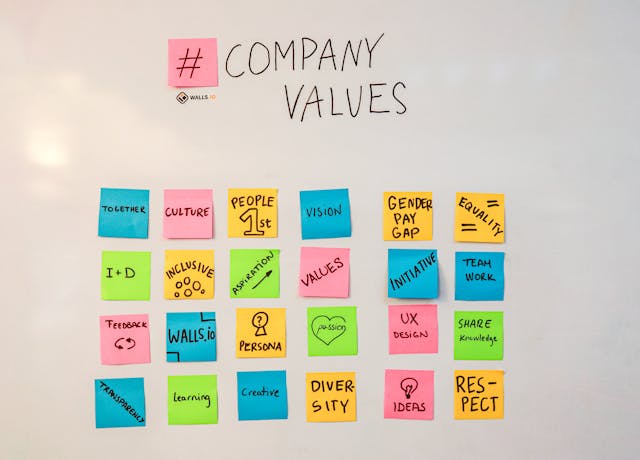
A company’s values serve as the foundation of positive company culture and consistently reliable company policies. That’s why clarifying those values is so important during the employee onboarding process. Essentially, it allows employees to know what to expect from their roles.
In your user onboarding process, you can emulate a company’s values in the way you communicate your brand’s identity. For example, if your brand’s identity stems from simplicity, you could adopt a minimalist design style and jargon-free copy.
By doing this, you will let your users know that they can expect simplicity from your products.

Professional Development
A company’s employee will often not complete the onboarding flow overnight. For employees, onboarding is a gradual process involving regular check-ins and opportunities for professional development.
Professional development revolves around the promise of growth and goal setting, which leads to job satisfaction.
Mimicking this in your user onboarding flows means thinking beyond the initial onboarding experience. Think about the support and training your users might need as you introduce them to new product features.
By adopting this mindset, you’ll help your users discover the new values of your ever-evolving product with ease. This, in turn, will encourage brand loyalty as you will always be adding value to the user’s experience.

Onboarding Buddies
It’s not uncommon for an employee to have an onboarding buddy as they fully integrate into the workforce. These buddies are often current employees who already know the company’s values and workflows, acting primarily as a support system.
Of course, the most obvious way to incorporate a ‘buddy’ in your user onboarding flow is to add support functions. These include the chatbots, FAQs, and product tours we mentioned earlier.
Another way you can do this is to encourage your users to network with other new users. This is where your community forums and social media channels enter the fray.
How To Create a Great Onboarding Experience
At this stage, you’re ready to apply your newfound knowledge and create an onboarding flow. To help you further, we’ve revealed below how to create a great onboarding experience.
1. Establishing the Correct Tone
The first thing you need to do is revisit your brand’s identity and brainstorm words that accurately reflect it. You may come up with words like “quirky” or “authoritative,” for example.
These words/phrases will help you determine the type of emotional response you want to evoke from your users. This will also help you decide on your onboarding’s flow design style, content, and visual elements.

2. Understanding the Users
Now, shift focus to your users. Start by conducting UX research and crafting user personas to contextualize your user base’s different segments.
With your research data, you will be able to determine which functional elements your onboarding flow needs. You’ll also acquire data that provides a window into your users’ preferences and interests, helping you personalize your onboarding flows.

3. Creating Your Welcome Screens
With what you know of your brand and users, you can start building your onboarding UI. Begin by designing a concise welcome screen that immediately outlines the key benefits of using your product.
Your copy should reflect your brand’s values and complement the onboarding’s visual design.
4. Designing Your Onboarding Elements
It’s time to get down to brass tacks – adding crucial onboarding elements.
Remember to keep your product tours brief and free of copious details. Ideally, your tours should showcase the most important features that meet a specific user segment’s needs. Once you’re happy with your tours, you should add your progress bars, checklists, and tooltips.
Tip: Remember to use the principles we discussed earlier and consider using onboarding tools like UserGuiding.
5. Testing & Improving
Once you have all of the right content and visual flourishes, you should test your onboarding flows on real users.
With the user feedback you receive, you’ll be able to spot any areas of friction within your flows. In your next iteration, you’ll demonstrate your user-centricity by rectifying these faults until you have a finalized flow.
At the end of this iterative process, you’ll have a polished, engaging onboarding flow!
FAQ
What makes a good onboarding experience?
A good onboarding experience will demonstrate intuitive navigation, engaging interactivity, helpful resources, and, above all, user-centricity.
Why is user onboarding important?
User onboarding is important because it shows users how they can use a product to resolve their problems. It will also show users how they can find new value in the product upon every interaction.
What is a user onboarding checklist?
During user onboarding, a checklist serves as a series of in-product tasks the user should complete. These tasks help users understand how they can navigate the product and how to derive value from it.
Creating the Best Onboarding Experience: Use Page Flows To Improve User Flows
The quality of your onboarding experience can either make or break your user’s overall experience. So, it’s safe to say optimizing your onboarding flow’s visual design, functional elements, and interactivity is crucial for user-centricity.
Mastering your user flows is also crucial for perfecting your product’s navigational ease. That’s why you’d benefit from having Page Flows in your corner.
Page Flows collects a wealth of recordings and screenshots that detail essential user flows from popular brands and industries.
Our mission is to provide designers with a reliable hub of inspiration to help them ideate innovative design solutions. Instead of reinventing the wheel, we encourage designers to learn from it to enhance their products’ flows.
That’s why we pride ourselves in the versatility of our resources. We document a range of flows, including onboarding, logging in, and signing up. These flows, in particular, are must-have components of a great onboarding experience.
Boundless, we also explore dozens of industries so you know how to adapt your flows to a specific target demographic. Ultimately, with Page Flows by your side, you’ll never have to worry about creating user flows that don’t meet expectations.
Get started today to learn what it looks like when a brand creates flows with user-centricity in mind!