The product development process wouldn’t be the same without UX design. Without UX spearheading the design and quality of our digital products, a business couldn’t hope to achieve customer satisfaction.
For that reason, every product team should value the user experience design process. But before product designers can value this process, they need to understand it and its many phases.
Fortunately, the topic of today’s guide will focus entirely on this process to help you make the best design decisions. By the time you’ve read this guide, you’ll know every design phase inside and out!

What Is the User Experience Design Process?
The user experience design process, or UX design process, is vital to the development of digital products.
UX design in itself is all about understanding, empathizing with, and optimizing the user’s journey. A UX design team will then transform this understanding into a meaningful digital product that resolves the users’ problems.
So, with that in mind, treat the UX design process as the blueprint of these meaningful digital products. It’s a collaborative blueprint, too, with UX and UI designers, UX researchers, UX architects, and UX analysts working closely together.
These UX professionals make up a skillful product development team that researches, designs, tests, and implements user-centric digital products.
The Essential User Experience Design Process Steps
As you can imagine, there are many steps and moving parts within the UX design process. If you want to create the best websites and mobile apps, you’ll need to know each of these steps completely. Let’s start with the initial design phase: defining crucial business goals.
1. Defining Business Goals
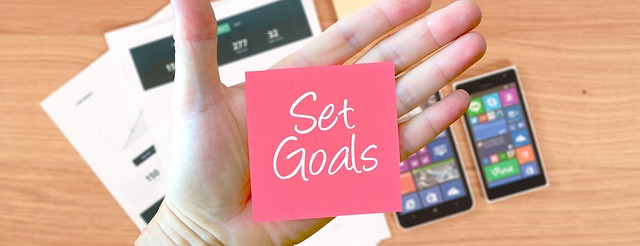
Before you start conducting any user research, you’ll need to have a series of discussions with your key stakeholders. These conversations revolve around defining the project’s goals, target users, deadlines, budgets, resources, tasks, and deliverables.
These conversations are also opportunities to justify the final product’s existence. You and your stakeholders will need to address the following questions:
- Why does this product need to exist?
- How will the product provide a more meaningful user experience than the competition’s products?
- How will the product help us achieve our business goals?
- What should the final product look like?
By having these conversations, you and your fellow designers will have clear objectives to govern your design process.
2. Conducting User Research
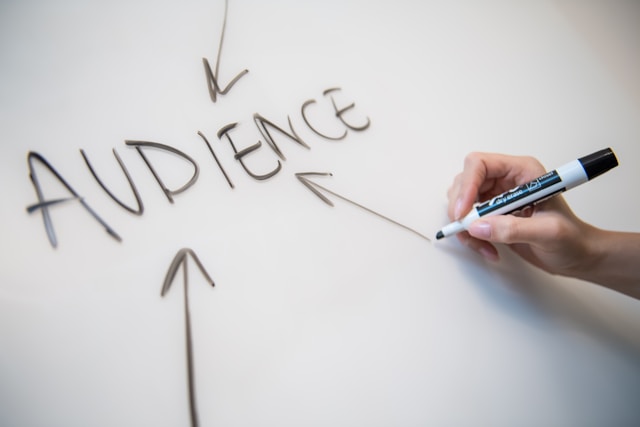
At this stage in the design process, you’ll want to shift focus to your users. This is where your team’s UX researchers enter the fray.
Your UX researchers’ goals are to understand your users’ needs, desires, goals, expectations, and frustrations. With this understanding, UX researchers can achieve user empathy. Accurate problem statements stem from such empathy, which is why it’s so essential to the design process.
An accurate problem statement can ensure that your designs provide digital experiences from which users derive value. In turn, this will also help you achieve the business goals that we discussed in the previous section.
Needless to say, UX researchers employ several UX research methods to extract the data that they will later analyze. While there are many different types of research methodologies, the most popular ones that researchers use are as follows:
- Quantitative research: This explores what a large group of users do. Due to the many user insights you can acquire from quantitative research, its findings appear as numerical data. Examples of quantitative research methods include user surveys with close-ended questions and quantitative tree testing.
- Qualitative research: This form of research reveals why users do the things they do. It focuses more on the users’ thoughts, feelings, opinions, and experiences, which is why you can’t express qualitative insights numerically. Examples of qualitative research methods include card-sorting sessions, user interviews, and focus groups.
It’s worth mentioning that, often, it’s not a matter of quantitative vs qualitative research. In actuality, it’s a matter of using them both to understand user behavior and what drives such behavior.

3. Analyzing Your Findings
Once you hit this stage, you’ll have an abundance of user-focused research, and your researchers will need to analyze it. By analyzing their research data, researchers can identify its most actionable and valuable insights.
UX designers will leverage these insights to inform their design decisions. That’s why the data that researchers emphasize usually relate to the users’ frustrations, regardless of their qualitative or quantitative nature.
Ultimately, research analysis provides designers with a crystal clear view of who their target users are and what they need.
This analysis also paves the way for user personas that accurately contextualize specific user segments with demographic and psychographic data. Similar to personas, research analysis leads to user journey maps.
User journey mapping is a means of visualizing how your users interact with your product as they achieve their goals. With this clarity, you can anticipate and resolve any areas of friction within the user experience.
4. Ideating Potential Solutions
You know the problem you’re trying to resolve inside and out. Now, you need to start ideating the solutions that will get the job done.
You’ll start by creating rough, hand-drawn sketches. UX sketching allows you to explore, put forth, and improve your initial design solutions in an efficient manner.
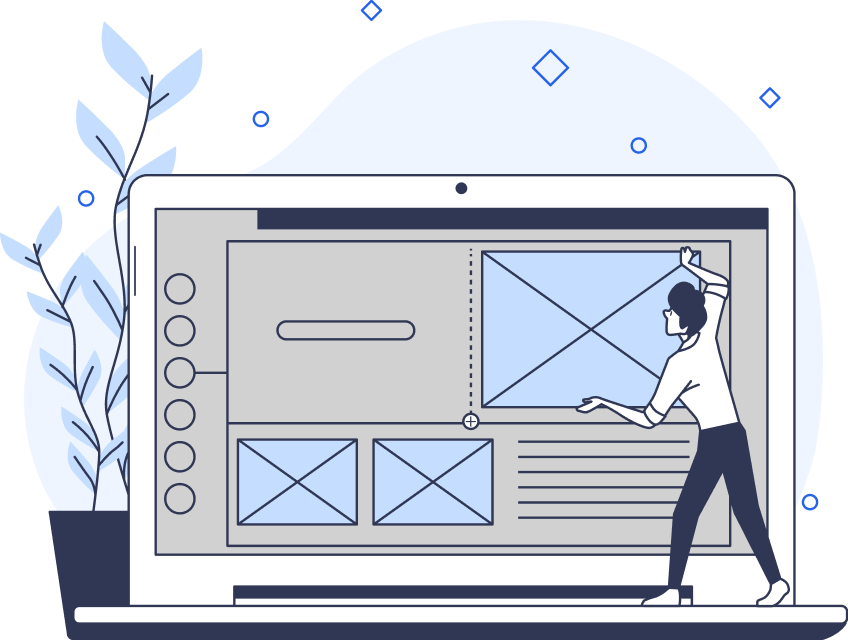
You’ll then turn the best sketches into wireframes, which are simply basic representations of your product’s user interfaces. Keep in mind that your wireframes are not the place to show off your product’s visual flourishes.
Instead, it’s an opportunity to visualize your product’s information architecture. With your wireframes, you’ll be able to assess your product’s usability, accessibility, navigational structure, and content placement.
After creating your wireframes, you’ll discuss them with your design team to ensure that they reflect your user research findings.
5. Building Prototypes
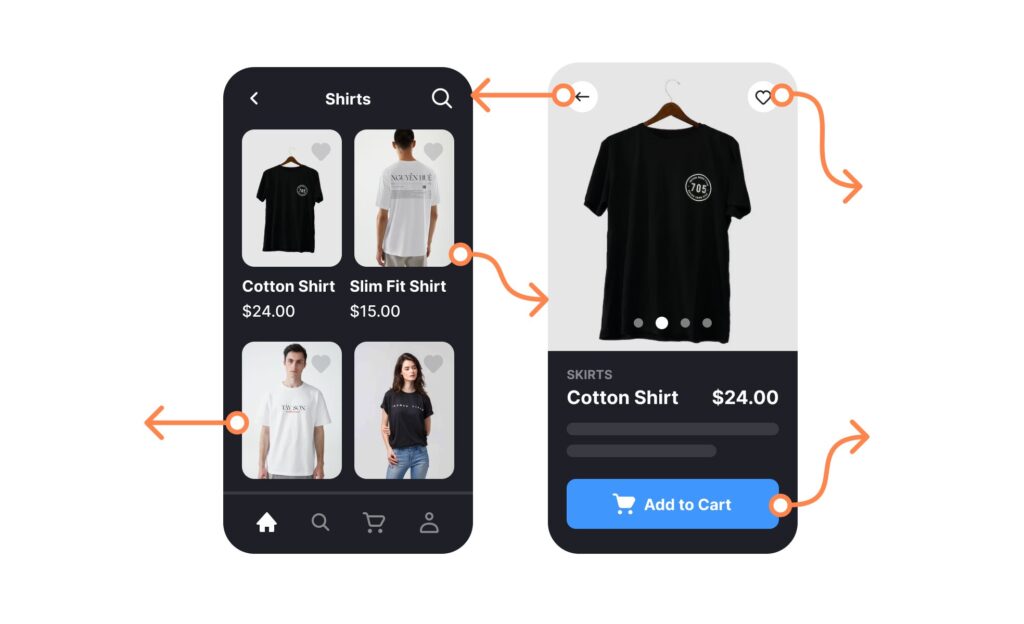
From your wireframes, you’ll have several usable interfaces that you can then develop into interactive prototypes. Your prototypes closely reflect the finalized version of your product.
For that reason, they aren’t as simplistic as wireframes and often include the visual elements of UI design.
With that in mind, it’s easy to see why designers use design tools like Figma and Canva to create prototypes.
Regardless of the tools you use to create your prototypes, the main thing is that you test them with users. Ideally, you should start with usability testing methods.
Usability tests allow you to observe how your users use your product. During this observation, you can determine how enjoyable your product is, as well as how easy it is to use. In other words, your usability tests illuminate areas of improvement within your product and the user’s experience.
After working on those improvements, we recommend that you then conduct multivariate testing sessions with your best prototypes/iterations. Multivariate testing involves testing specific variables of two competing designs to determine which one is the best for the user.

6. Testing and Launching Your Product
You may be wondering why we have a section about testing your product after we discussed testing just moments ago. Well, as a member of a product design team, you need to expect to conduct rigorous and continuous product testing.
At this point, you’ll have one remaining prototype, and based on your previous tests, it will be the best one. Your goal is to ensure that your final prototype achieves the goals you set at the start of this process.
So, you may conduct usability tests like five-second testing and remote testing sessions. You may even create new user surveys to gain valuable user feedback and make any further adjustments.
After implementing the last touches, you’ll be ready to hand over your designs to your development team. You may think that this handover marks the end of your work, but that’s not the case.
Even after your product’s release, you’ll continue to monitor users’ interactions with it. Based on this new user data, you’ll introduce new features and designs that build upon that initial user experience.
Remember that the UX design process is one of iteration and continuous development. Your users’ needs will change over time, and to stay ahead of your competition, you’ll need to adapt. You can only do that by repeating this process.
The User Experience Design Process Diagram
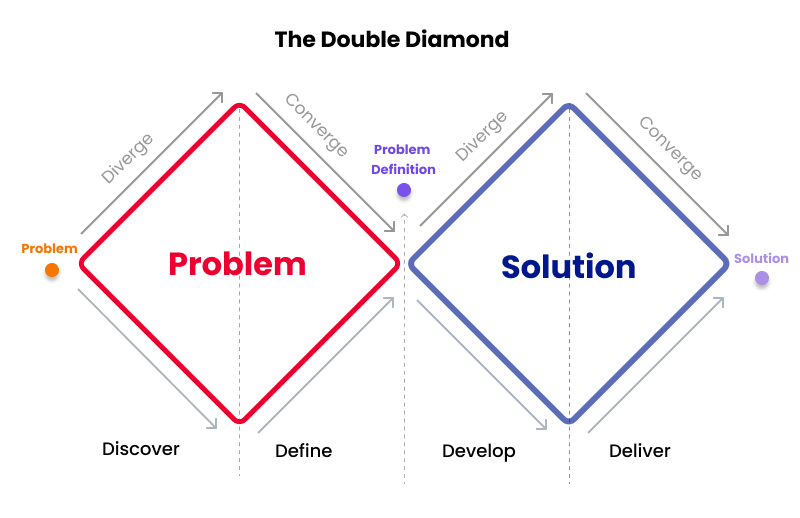
If there’s any diagram that visualizes the UX design process effectively, it’s the Double Diamond model.
A product of the British Design Council, the Double Diamond model is the perfect guideline for all UX designers. With this model, you have access to a clear, standardized process, so let’s explore it further.
The Double Diamond model comprises two diamonds and four design phases. The first diamond focuses on the problem that you’re trying to solve with your product. Two of the four Double Diamond phases coincide with this initial diamond, and they are as follows:
- The Discover Phase: This phase involves conducting extensive user research to understand users, their problems, and the context behind them.
- The Define Phase: The second phase revolves around transforming user research data into a simple, actionable problem statement.
The second diamond focuses more on creating the solution to the problem that you want to solve. When you reach this diamond, you’ll be working through the following two phases:
- The Develop Phase: During this phase, you’ll ideate your design solutions and create sketches, wireframes, and prototypes. You’ll also test and refine these iterations of your product to ensure your solutions are effective and user-focused.
- The Deliver Phase: The final phase involves testing, improving, and developing your best design until it becomes a finalized product.
If you ever feel stuck during the design process, we recommend consulting the Double Diamond model.
The User Experience Design Process: Perfect Your Own With Page Flows
Before you start revolutionizing your approach to the UX design process, we’d like to introduce you to an invaluable resource. This resource is Page Flows.
Page Flows is the home of a vast wealth of annotated user flow recordings and screenshots from immeasurably successful brands. We collect nothing less than the best desktop and mobile user flows to show designers what intuitive navigation looks like.
With Page Flows, you’ll witness a diverse range of complete and user-centric user journeys from world-class products. From collaboration tools to cryptocurrency, our resources span dozens of prosperous industries.
Best of all, we value every type of user interaction. Put differently, we document everything from interactions as crucial as onboarding to interactions as basic as inviting friends.
Your user experience design process would be incomplete without considering and creating exceptional user flows. That’s just like how your go-to arsenal of inspiration would be incomplete without Page Flows. Get started today to learn from the designers who inspire you!
FAQs
What are the four core processes of designing UX?
The four key processes of UX design include user research, design, user testing, and implementation.
What are the six stages of the UX design process?
The six stages of the UX design process are as follows:
– Research your target users and ideate a realistic problem statement.
– Define project objectives and align them with business goals.
– Create design solutions that address the users’ problems.
– Test your designs with real users to acquire actionable feedback.
– Implement any necessary changes and launch your product.
– Collect user feedback and create new and improved iterations.
What is a UX flow?
A UX flow is a diagram that visualizes the path that users follow as they interact with a digital product.