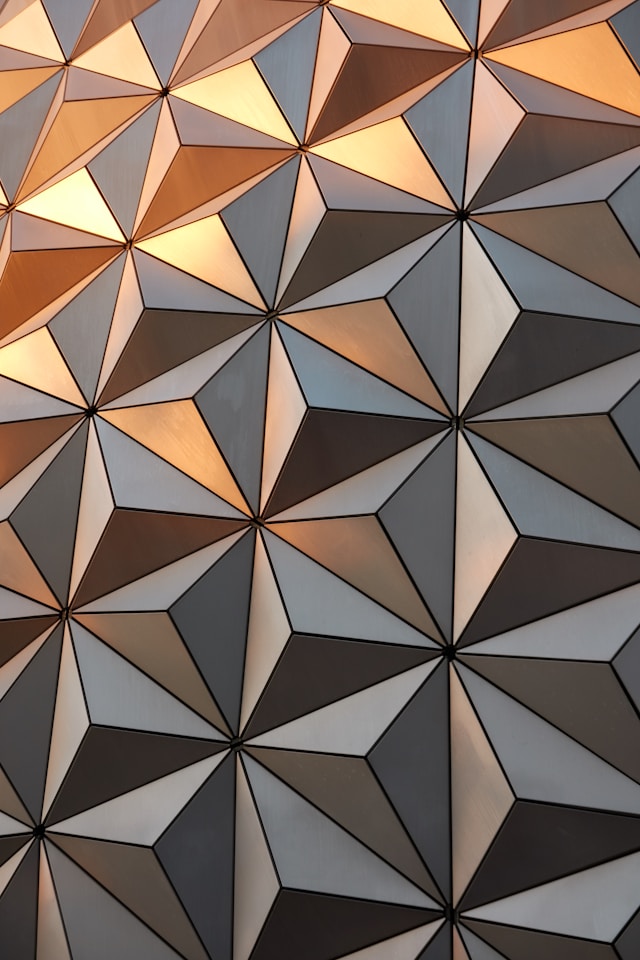

Every graphic designer wants to deliver work that is not only practical but is also able to evoke strong emotions. A great way to ensure that is to learn about graphic design art.
In today’s guide, we’ll help you learn as we explore artistic graphic design styles, techniques, and influential artists.
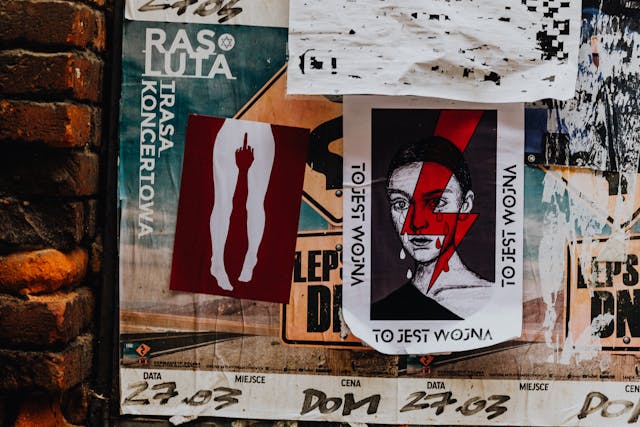
What Is Graphic Design in Art?
You’re probably wondering, “What is graphic design in art?” To answer this question, we’ll need to define graphic design first.
Graphic design is the craft of ideating, creating, and arranging visual elements to communicate a message or information. Graphic designers create visual aspects like color, contrast, shape, line, form, texture, imagery, and typographic elements.
So, when we talk about graphic design in art, we’re discussing the fusion of its principles/techniques with artistic expression. This means designing for more than just visual communication and functionality but also expressive aesthetics.
Is Graphic Design Art?
Surprisingly, this question comes with a distinct polarity, with two sides of the internet in opposition to each other. One side sees graphic design and art as separate entities because graphic design isn’t about purely creating designs for self-expression.
Graphic design is primarily a problem-solving discipline in which designers create graphic design elements to communicate messages to an audience. Unlike art, you can evaluate the effectiveness of a graphic design’s functionality by examining retention and conversion rates.
What’s more, graphic design inevitably involves mass reproduction, which diminishes its authenticity. For these reasons, some people don’t consider graphic design a true art form.
That said, more people are arguing that graphic design is art, and it’s not hard to see why. Both graphic designers and artists rely on their understanding of color, composition, spacing, forms, shapes, and lines to produce deliverables.
Both graphic design and art focus on evoking emotions and provoking thoughts from those who view their work.
Additionally, the creative processes for graphic designers and traditional artists are much the same. These respective processes include finding inspiration, brainstorming ideas, artistic experimentation, and final refinements.
Ultimately, we say that graphic design is a form of art. But where does that leave us on graphic art vs graphic design?
Understanding the Difference: What Is Graphic Art and Design?
As you might expect, graphic artists use the same graphic design elements that a graphic designer would use. The difference is that where graphic design must exist within the limitations of functionality, graphic art knows no such bounds.
In this sense, graphic art is more expressive, imaginative, and creative than graphic design can be. This freedom means that graphic artists don’t have to contend with anyone’s desires or artistic direction besides their own.
That’s why many graphic artists work on things like illustrations, comic strips, cartoons, and storyboards. They’ll also use more techniques than a graphic designer typically would, including painting, drawing, and sketching.
Conversely, the art that graphic designers produce serves as the resolution to a problem, meaning it’s much more objective. Graphic designers also use graphic design principles to govern their designs, ensuring that they meet their clients’ and users’ needs. As you can see, graphic designers focus more on communicating their client’s message rather than their own.
It’s for that reason that graphic designers tend to work on projects that include product packaging, logo designs, and advertisements.
What Art Movement Was Associated With Early Graphic Design?
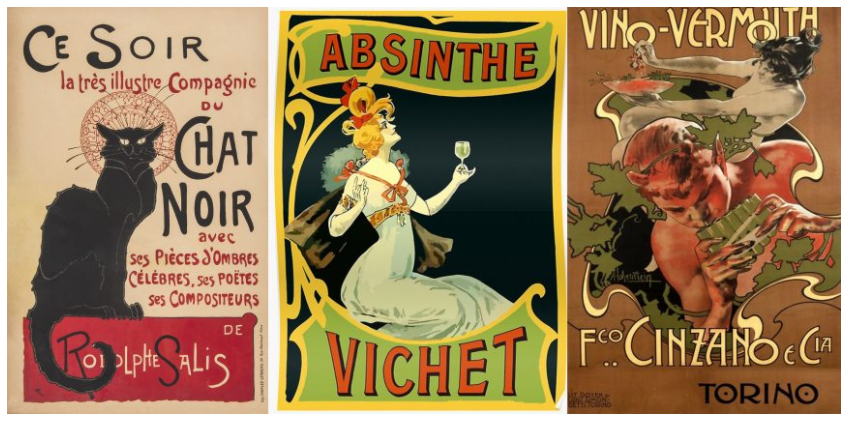
Of course, it’s the Art Nouveau (New Art) movement. Popular between the 19th and 20th centuries, Art Nouveau eschewed the traditional 19th-century styles in favor of modernity.
It was a movement that stemmed from a retaliation against the Industrial Revolution. For that reason, Art Nouveau celebrates liberated forms, fluid lines, asymmetry, geometric and organic shapes, intricate patterns, and earthy hues.
In modern graphic design, Art Nouveau communicates a powerful message: to always cherish and return to the natural world.
4 Graphic Design Art Styles To Inspire You
Experimenting with the Art Nouveau graphic design style will definitely help you refine your design’s aesthetic appeal. But that doesn’t mean you shouldn’t still branch out and try other spectacular art styles, too. Consider experimenting with the art styles that we’ve explored below.
1. Art Deco
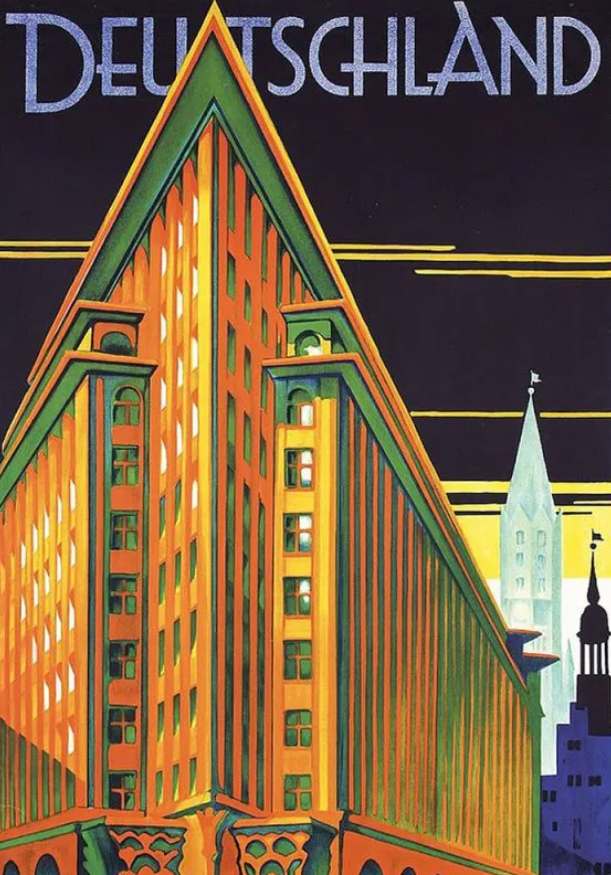
Art Deco was a popular design style in the 1920s and 30s. Similar to Art Nouveau, Art Deco sought to imbue functional objects with artistic embellishments. Art Deco was all about luxurious consumption, celebrating wealth and luxury as a reaction to World War I’s austerity.
If you want to experiment with the Art Deco style, you’ll need to leverage its core characteristics. These characteristics include opulent ornamentation, bold geometric forms, capitalized typography, symmetry, richly contrasting colors, and an overall sense of glamor.
2. American Kitsch
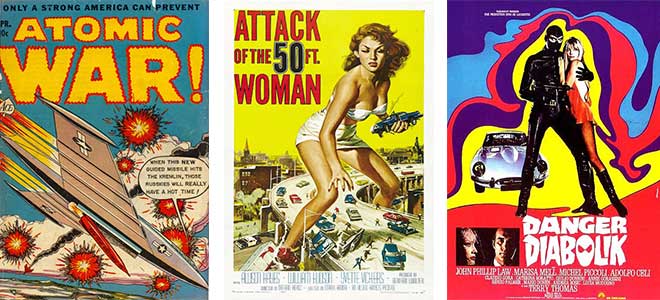
American Kitsch was extremely prevalent in the United States between the 1920s and the 1960s. Back then, you’d find the American Kitsch style in magazine covers, billboards, advertisements, and movie posters.
You can spot the American Kitsch style by its signature cartoonish illustrations, high-contrasting colors, dramatic curves, and caricatured images. It’s not just the colors that speak to contrast in American Kitsch styles. You’ll often find letterforms with different hues, sizes, and baselines, too.
Many consider the American Kitsch style as “ bad taste.” Whether or not this is true is up to you to decide. Either way, it’s still a style that rejects high art in favor of popular culture, which can prove inspirational.

3. Psychedelic
When we think of the art styles of the 1960s, we naturally think of psychedelic art. Of course, the psychedelic art style relates back to the influence of mind-altering drugs like LSD and counter-culturalism.
Experimenting with psychedelic characteristics is a great way to push yourself out of your comfort zone. Think kaleidoscopic, surrealist effects, highly saturated colors, near-illegible fonts, curvy baselines, distortion, and intricate geometric patterns.
As a modern graphic designer, however, we recommend approaching psychedelic art styles with caution in mind. Using the clashing colors and warped typography of psychedelic art could potentially compromise your design’s accessibility.
4. Punk
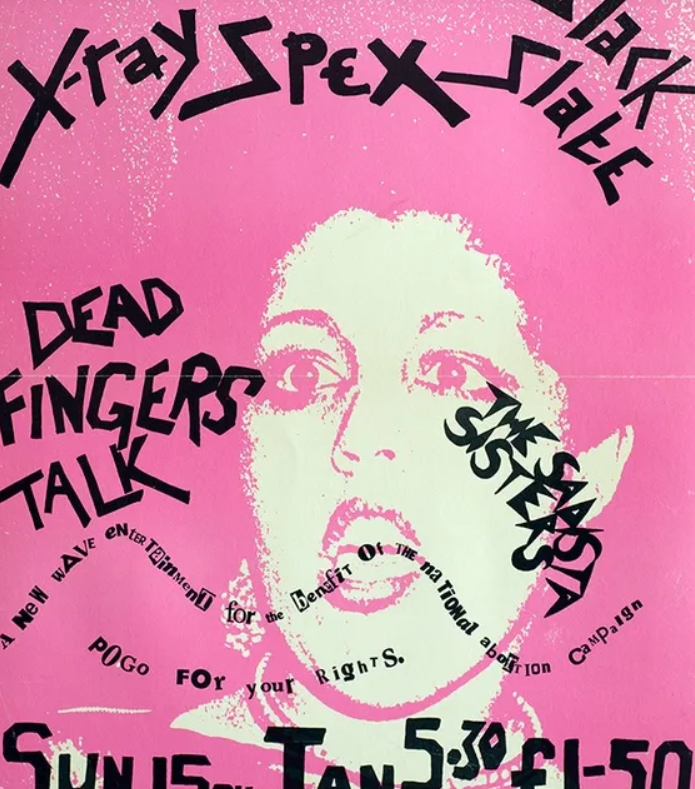
Cast your mind back to the 1970s and 80s when non-conformity, anti-authoritarianism, and artistic DIY were prevalent. The result of this anti-establishment mindset was the punk art style.
There’s something almost anti-art in the characteristics of the classic punk art style, like the noisy, low-quality imagery, for instance. That’s not to say the punk style wasn’t creative; many punky designers would create mismatched typography from magazine cut-outs.
They’d also create messy compositions, discordant collages, torn, papery textures, and monochromatic color palettes (if there even was any color). If you want to embrace your inner punk in your designs, you need to celebrate rebellious imperfections.
Graphic Design Art Techniques To Learn From
When you find the right style, you’ll have the foundations of a great design. Your next step is to apply engaging techniques to elevate your designs even further.
To help you find the right techniques, we’ve discussed some of the most intriguing, popular ones below.
1. Overlaying Effects
Overlaying effects act as the top-most layers in any design you create. When you use an effective overlay effect, you can significantly increase your design’s visual intrigue.
We especially recommend using a double exposure effect. Double exposure simply refers to the combination of two images into one layer. For instance, you could design the silhouette of a person. Instead of filling the silhouette with human features, you could overlay it with an image of a forest.
We also suggest using a frosted-glass overlay (glassmorphism) which includes blurred background designs behind semi-transparent elements, creating the frosted-glass-like effect.
2. Grids
Designers use grids to organize their designs’ layouts. Grid systems are easy to use, as they involve taking a page and dividing it into several vertical/horizontal fields.
Your chosen grid system will allow you to align visual elements, helping you refine your design’s structure. With the right grid, you’ll also be able to group related elements together more effectively and establish visual balance.
Overall, grids are crucial to improving the user’s experience with your designs.
3. Negative Space
Negative space, or white space, refers to the empty space within visual elements. As creative professionals, designers often want to jam-pack their designs full of compelling visual elements.
While this is understandable, it’s not a good idea. Without negative space, your designs will lack a strong visual hierarchy and intuitive navigation. You’ll also find it much more difficult to guide your users’ attention to the most important aspects of your design.
A great way to practice using negative space is to keep your background design simple. This will enable you to arrange and rearrange your visual elements easily.
4. Masking
Image masking is an incredibly useful technique that you can leverage in graphic design software like Photoshop.
Essentially, masking is the process of revealing or hiding a particular portion of an image. It’s a way of editing your images non-destructively, allowing you to make much more precise modifications.
Additionally, image masking proves really handy when you need to remove a background from an image. Ultimately, image masking is your gateway to improving the quality of the imagery you use in your designs.
Influential Artists and Designers You Should Know
Before you finish reading this guide, we’d like to point you in the direction of some valuable inspiration. And what’s more inspirational than learning about the most influential graphic designers and artists in the world?
1. Paula Scher
Paula Scher began her career as an art director in the 1970s. She became a partner in Pentagram’s New York office in 1991 and has been there ever since.
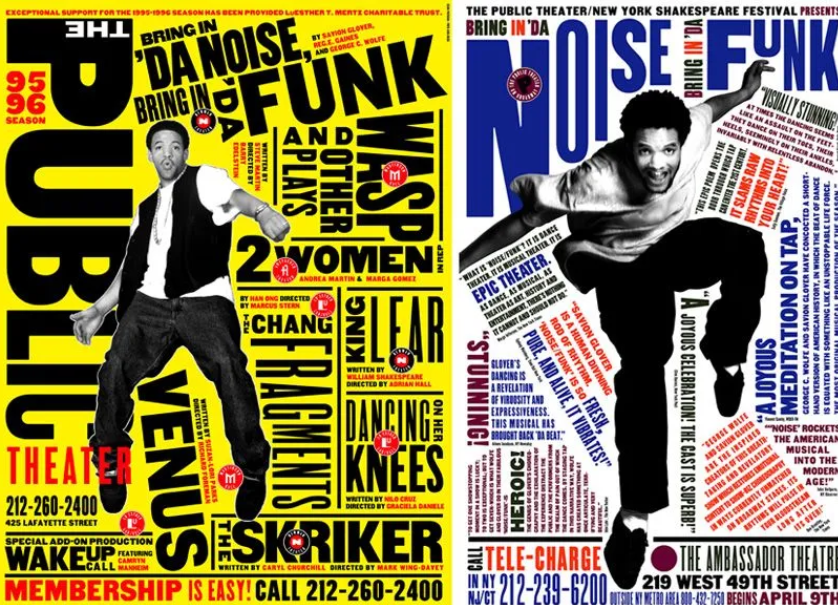
Studded with hundreds of awards, Scher’s career is one of immense creativity and focus, dedicating herself to rigorous client-focused research. Most notably, Scher was responsible for creating the new identity and theatrical promotion system of The Public Theater.
2. Milton Glaser
Milton Glaser was an incredibly talented graphic designer whose uniqueness and creativity are timeless.
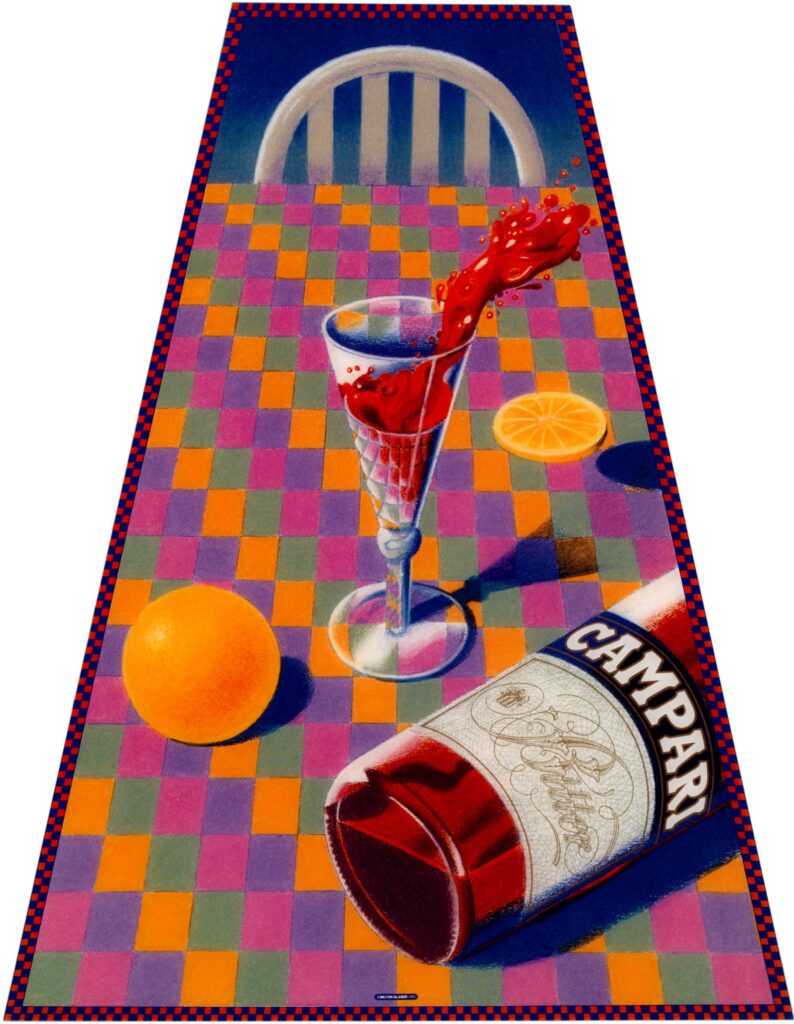
Think of the iconic I Love New York logo; that was the work of Milton Glaser. Glaser was also the brilliant mind behind Bob Dylan’s Greatest Hits poster and AMC’s Mad Men poster (2014). He was even responsible for the 1992 Campari poster.
Over a 70-year-long career, Glaser’s contributions to the graphic design world speak to innovation, imagination, and playfulness.
3. Alan Fletcher
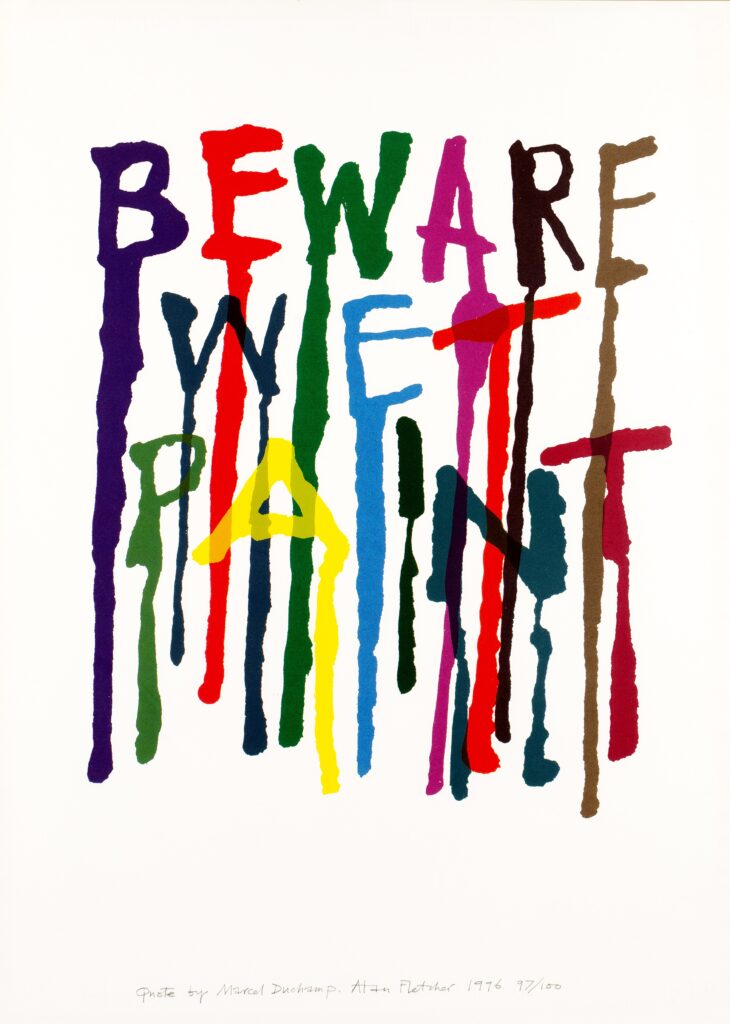
Alan Fletcher was another multi-award-winning graphic designer who specialized in creating innovative illustrations and typography.
His work was charming, authentic, and even humorous. Just think of one of his most famous works: the iconic “Beware Wet Paint” design for Domus Magazine.
This design perfectly encapsulates the things that people love about Fletcher’s work. It’s endearingly fun, daringly innovative, and humorously clever.
FAQs
What is a simple definition of graphic design?
Graphic design refers to the creation and composition of visual elements to communicate information to the viewer.
Does graphic design involve drawing?
Graphic design doesn’t always involve drawing, but graphic designers always benefit from having drawing skills. They can use these skills to produce rough sketches of their initial concepts.
What is the difference between a graphic artist and an artist?
Graphic artists usually use digital tools to produce deliverables for clients and communicate messages to said clients’ target audience. Traditional artists tend to use tools like paints, pencils, and brushes and typically aim to sell their work for profit.
Graphic Design Art: Use Page Flows for Design Inspiration
We hope that you feel more confident when unleashing your inner artist. As graphic designers, however, you need to remember to prioritize one crucial element – user-centricity. At Page Flows, we’re here to keep you on the right track.
With Page Flows, you’ll have access to an abundance of inspirational resources in the form of annotated user flows. Our curations of user flow recordings and screenshots come from dozens of successful brands and thriving industries.
Our mission is simple. We want to help designers master intuitive in-product navigation by learning from the best of the best in their industries. From onboarding to logging out, we collect every user flow that you could ever learn from.
Best of all, we document both web and mobile user flows so you can stay current with our mobile-first world. Like graphic design art, we’ll help you make your designs more compelling. Get started today to take your designs to the next level!